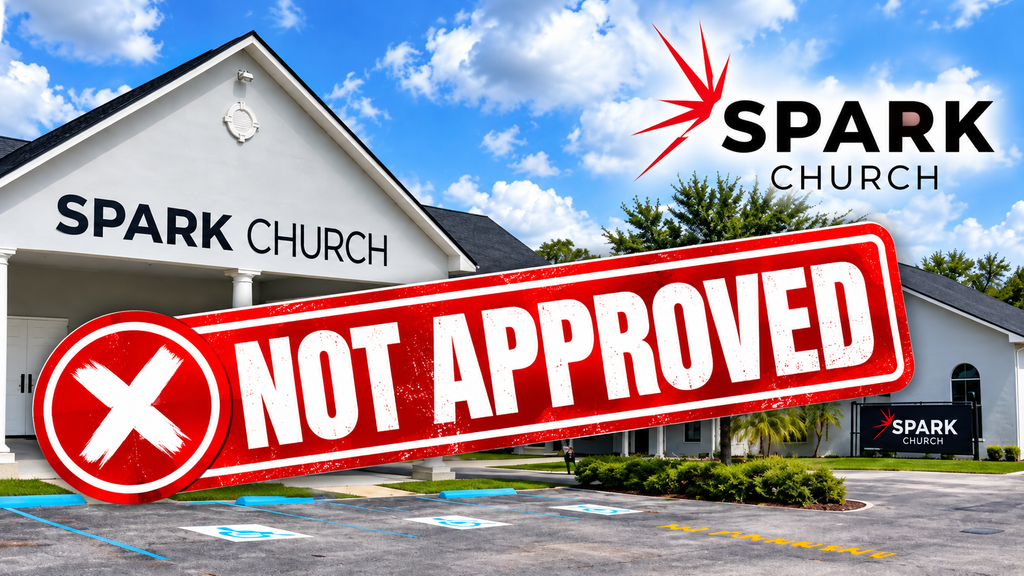
33425 Wesley Chapel Blvd.Wesley Chapel, FL 33543- Visited in Person

Spark Church publicly states, “There’s a place for you here.” Our review considers that public message alongside what we experienced during our time at the church and in our subsequent interactions with its leadership.
Our Experience
Our experience with Spark Church did not begin negatively. We attended more than once, and the people we encountered in the congregation were friendly and welcoming. Pastor Garrett was also personally friendly toward us.Our concerns developed later through direct conversations with church leadership about salvation, repentance, sin, grace, and what it means to follow Christ.
Our Conversation With Pastor Garrett
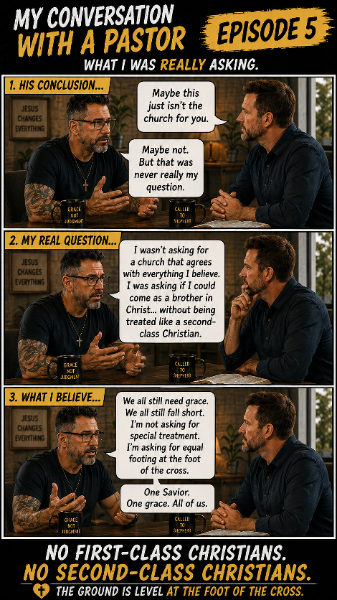
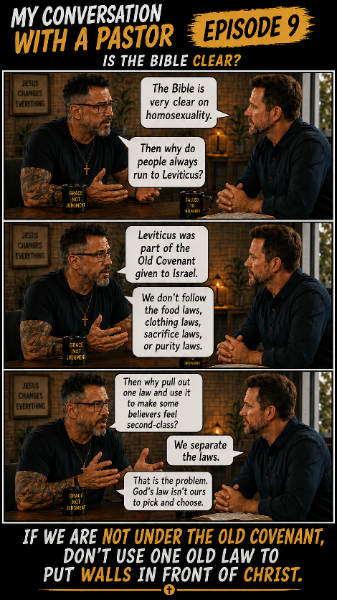
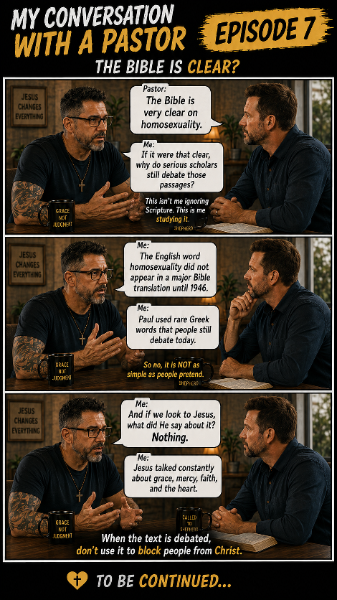
As we became more involved, I began asking Pastor Garrett questions about salvation and the Gospel. These were not minor theological questions to me. I wanted to understand clearly what Spark Church teaches about how a person is saved and what role repentance, sin, and obedience play after salvation.
During our conversations, Pastor Garrett explained his understanding of deliberate and unintentional sin. This raised serious concerns for me because I believe Scripture teaches that salvation is received by grace through faith in Jesus Christ, not maintained by our ability to successfully avoid particular categories of sin.
I continued asking questions because I wasn’t looking for a reason to leave Spark. In fact, I told Pastor Garrett that I felt God might be leading me there and that I genuinely wanted Spark to be our church.

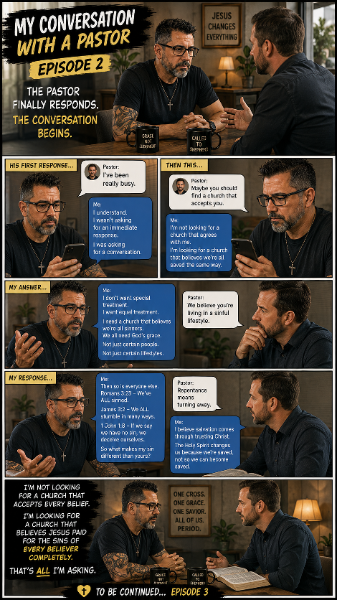
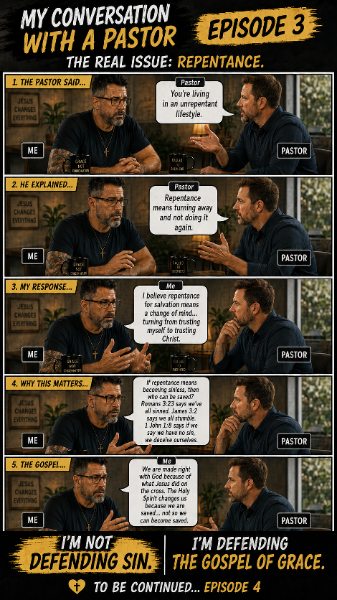
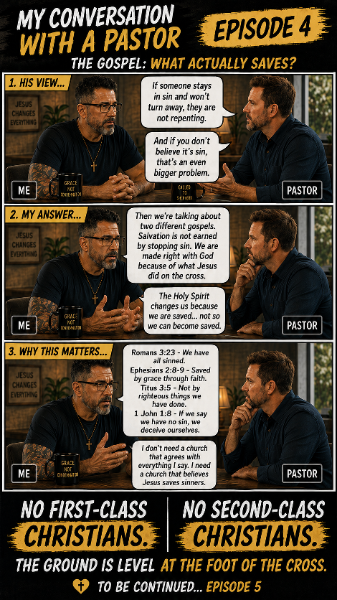
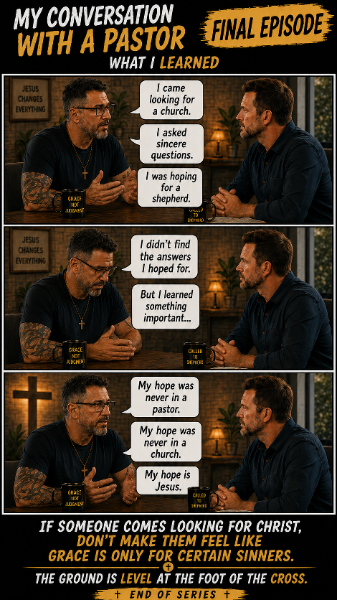
Why This Conversation Matters
This conversation is important because our concern was never simply that we disagreed with a pastor. Christians can disagree about many secondary issues and still worship together.
Our concern is the Gospel itself.
When questions involve how a person is saved, whether salvation can be lost, what repentance means, and whether continued or deliberate sin determines a believer’s standing before God, those questions deserve careful examination against Scripture.
Accepted Ministries believes salvation is God’s gift, received by grace through faith in Jesus Christ. Eternal life is not earned by good behavior, nor is it maintained by successfully avoiding certain categories of sin. Good works, obedience, and spiritual growth matter deeply in the Christian life, but they are the result of salvation, not the means by which salvation is obtained or kept.
Because of that, we believe anyone considering Spark Church should carefully examine its teaching on salvation and compare it directly with Scripture.
What Does the Bible Say?
Our standard is not whether we agree with a pastor, denomination, or church. Our standard is Scripture.The central question is simple: What does the Bible say a person must do to be saved, and what does God promise the person who believes in Jesus Christ?
Salvation Is Received by Faith
When the Bible directly answers the question of salvation, the answer is remarkably clear.
Acts 16:30–31 records the Philippian jailer asking, What must I do to be saved? Paul and Silas answer, Believe in the Lord Jesus, and you will be saved.
Jesus says in John 6:47, Whoever believes has eternal life.
John 3:16 says that whoever believes in Him will not perish but have eternal life.
John 5:24 goes even further. Jesus says the person who hears His word and believes has eternal life, does not come into judgment, and has passed from death to life.
Ephesians 2:8–9 explains why: salvation is by grace through faith. It is the gift of God, not a result of works.
These passages do not describe salvation as something earned by reforming our behavior or maintained by achieving a certain level of obedience. They describe salvation as God’s gift received through faith in Jesus Christ.
What About Sin After Salvation?
Christians still sin after salvation. Scripture does not pretend otherwise.
First John 1:8 says that if we say we have no sin, we deceive ourselves. Paul describes his own struggle with sin in Romans 7:15–25. The presence of sin in a believer’s life is serious, but the biblical question is whether that sin causes a believer to become unsaved.
Scripture distinguishes salvation from fellowship, discipleship, discipline, and reward. Sin can damage our fellowship with God, bring painful earthly consequences, result in God’s discipline, harm other people, and cost a believer eternal rewards. None of those consequences should be minimized.
Repentance and Ongoing Forgiveness
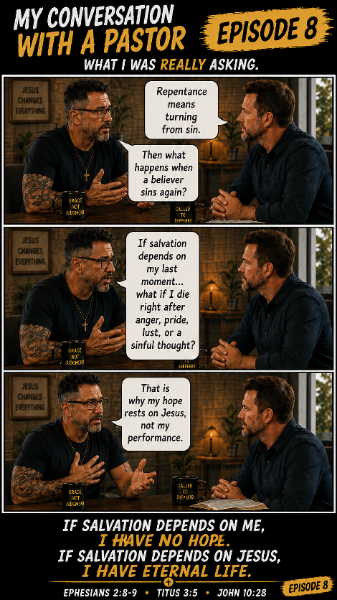
Another significant concern that arose in our conversations with Pastor Garrett involved repentance and forgiveness after salvation.
Our understanding from those conversations was that a Christian must continue repenting of individual sins in order to receive ongoing forgiveness for those sins. In other words, forgiveness was presented to us as something that must continue to be obtained through repentance as sins are committed.
Pastor Garrett did not tell us in these exact words that a Christian who dies with an unrepented sin automatically goes to hell. We do not want to attribute words to him that he did not use. However, his explanation raised an important question for us: if a believer must repent of each sin in order for that sin to be forgiven, what happens when a believer dies before having the opportunity to repent of a particular sin?
This is where we believe the distinction between salvation and fellowship with God becomes extremely important. Christians should confess sin, turn from sin, and seek to walk in obedience to Christ. But we do not believe those actions repeatedly restore a salvation that is lost or repeatedly obtain the judicial forgiveness necessary to remain saved.
Scripture presents Christ’s sacrifice as sufficient and complete. Hebrews 10:14 says that by one offering He has perfected for all time those who are being sanctified. First John 1:9 addresses confession and cleansing in the believer’s ongoing walk with God, but we do not believe it teaches that a Christian repeatedly moves between eternal life and condemnation depending upon whether every individual sin has been confessed.
The Sunday Experience
Worship & Music
When we first began attending Spark Church, services were being held in a movie theater and the church was still relatively new. The worship team was small, with only a few singers, and we personally found it difficult to engage with the music at that time.
After Spark moved into its current building, we noticed an improvement in the worship experience. The music and overall presentation have become more developed as the church has grown.
We would not consider the worship experience to be one of Spark’s strongest features compared with some other churches we have attended, but it has improved considerably since the church’s earlier days. Worship style and music are also highly subjective, so this is an area visitors may experience differently.
Welcome & First Impressions
Our first impressions of the people at Spark Church were positive. When we arrived, we were greeted, and the people we interacted with were friendly and welcoming.
We spoke with several people during our time at Spark and did not feel judged or unwelcome by the congregation. Our concerns about Spark Church did not originate with the people attending the church.
Pastoral Accessibility
One of our concerns developed when we began asking important theological questions and trying to get clear answers from church leadership. These were questions about salvation and other matters we consider central to the Christian faith, not simply questions about church programs or preferences.
Getting those questions resolved often took considerable time. We understand that pastors have many responsibilities and cannot always respond immediately, but we believe members of a congregation should have reasonable access to their spiritual leaders, especially when they are seeking answers about the Gospel and foundational Christian doctrine.
Children & Youth
Spark Church offers programming for children and youth, including a Wednesday night gathering where young people can participate in worship, teaching, and activities designed specifically for their age group.
We consider this a positive feature of the church. Providing young people with a safe environment where they can build friendships, participate in church, and learn about the Christian faith is an important ministry for families.
Giving & Offering
During the services we attended, Spark Church collected offerings by passing containers through the congregation. Giving was also discussed during the service on multiple occasions.
We recognize that churches depend on the voluntary financial support of their congregations to operate and carry out ministry. Our concern was not that Spark Church talked about giving, but that the emphasis on giving sometimes felt greater than we personally prefer during a worship service.
We prefer churches to make giving opportunities available without creating unnecessary pressure or making financial appeals a recurring focus of the service. Other visitors may not view Spark’s approach the same way, so we consider this more a matter of church culture and personal preference than a doctrinal concern.
Sermon & Biblical Teaching
Biblical teaching is one of the most important areas we consider when reviewing a church. A sermon can be engaging, encouraging, and well presented, but our primary concern is whether what is being taught is consistent with Scripture.
Our primary concerns with Spark Church’s teaching center on the issues already discussed in this review, particularly salvation, repentance, forgiveness, and the believer’s security in Christ. Because these subjects are foundational to the Gospel, we believe they deserve greater weight than preferences about worship style, facilities, or the format of a Sunday service.
We encourage anyone considering Spark Church to listen carefully to its teaching for themselves, open the Bible, examine the passages being used in context, and determine whether what is being taught agrees with Scripture.
What Spark Does Well
Our concerns about Spark Church do not mean that everything about our experience was negative. There were several things we appreciated during our time there.
The people we encountered were friendly and welcoming. We did not feel judged by the congregation, and several people took the time to speak with us and make us feel comfortable.
Spark also provides opportunities for children and young people to participate in church beyond the Sunday service. We appreciate its investment in youth ministry and the opportunity it provides for young people to gather in a positive environment centered around the Christian faith.
We also saw the church grow from meeting in a movie theater into its own facility, and the worship experience improved as the church developed.
Our Main Concerns
Our primary concern with Spark Church is theological. Based on our conversations with Pastor Garrett, we have significant concerns about the church’s teaching concerning salvation, repentance, ongoing forgiveness of sin, and the security of the believer. Those concerns are explained and documented earlier in this review.
Our second concern is pastoral accessibility. When we sought clarification about important spiritual and theological questions, getting answers from church leadership was often difficult and took considerable time. We believe people attending a church should have reasonable access to qualified spiritual leadership when they have serious questions about their faith.
We were also troubled by the difference between Spark’s public message that “There’s a place for you here” and how our relationship with church leadership ultimately developed. We felt welcomed by the congregation, but our experience became very different when we began questioning and disagreeing with certain teachings.
Finally, some aspects of the Sunday experience, particularly the recurring emphasis on giving, were not our preference. We consider this a secondary concern and a matter visitors can evaluate for themselves rather than placing it in the same category as our theological concerns.
Final Thoughts on Our Spark Church Review
Spark Church has qualities we appreciated, particularly the friendliness we experienced from people in the congregation and the opportunities provided for children and youth. Our concerns are not about whether good people attend Spark or whether positive ministry happens there.
Our concerns center primarily on what we believe are important differences in the understanding of the Gospel and on our experience seeking answers from church leadership. We encourage anyone considering Spark Church to read this review, examine the documented conversations, compare the teachings discussed here with Scripture, and make an informed decision for themselves.
Because this is the first church review published by Accepted Ministries, we have intentionally provided more detail to demonstrate what we examine and why these areas matter. Future reviews will generally be shorter while following the same review standards.
For more in-depth evaluations of churches we visit, explore our Church Reviews, where we examine the teaching, ministry, and overall experience of each church.